
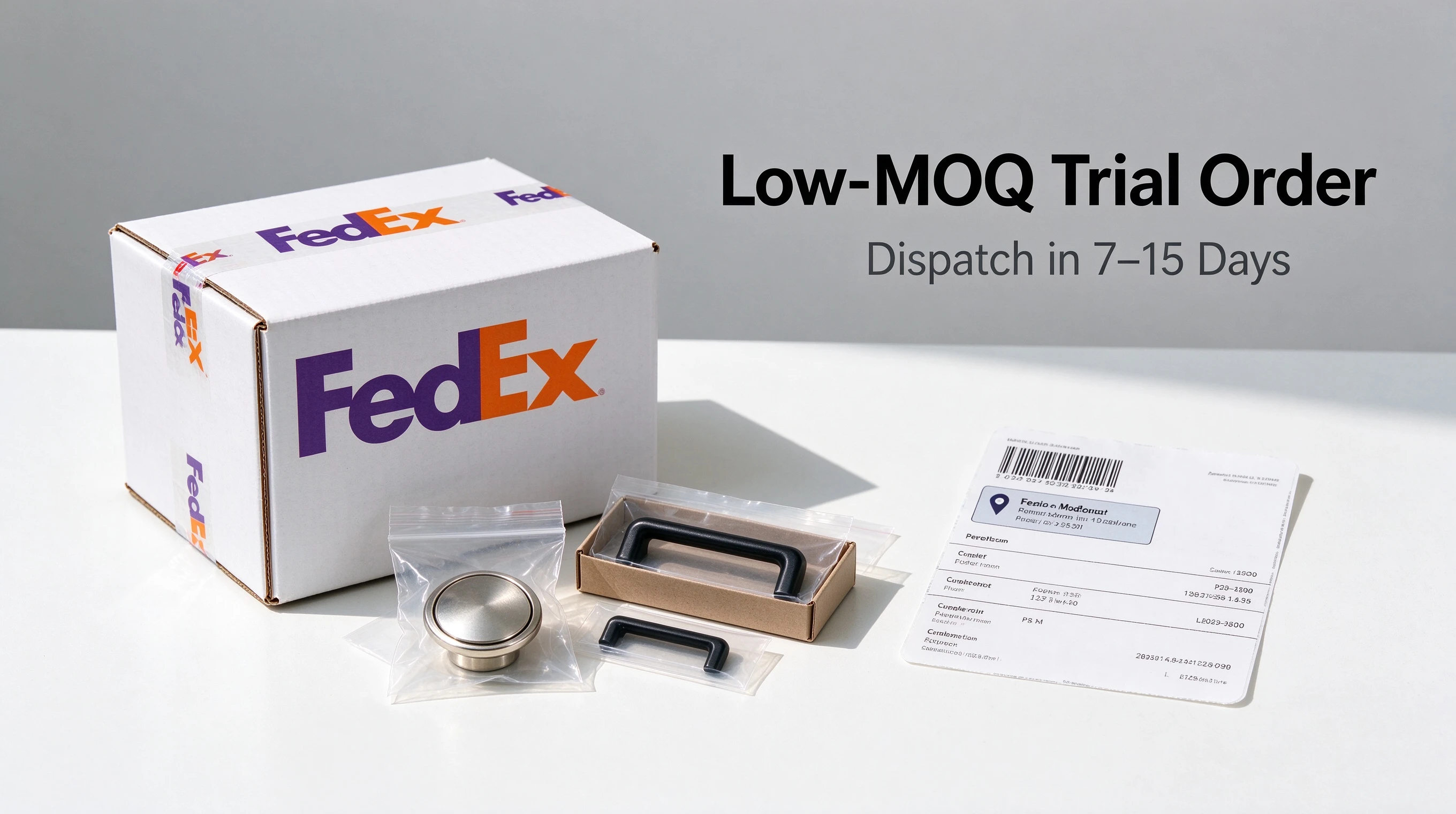
Every distributor knows the risk of switching suppliers... That is why the smartest distributors no longer start with a container. They start with a low-MOQ trial order. This is how to test a backup supplier right.
Step 1: Redefine What a "Trial Order" Means
Most factories will tell you their MOQ is 500 pcs per model. If you ask for 20 pcs, they either refuse or charge you a premium that kills your margin.
When you approach a new supplier, ask this specific question: "Do you have stock ready for these 3 models, and what is the minimum you can ship for a trial?"
If the answer is "yes, 10-20 pcs per model," you have found a supplier built for testing. This is exactly how we operate at HandLink. We keep 300+ models in stock, specifically so buyers can test a design with 10–20 pcs before scaling up.
Step 2: Choose the Right Models for Your Test
Do not test with a completely new, custom design. That requires tooling, longer lead times, and high risk.
For a first trial, select 3 to 5 models that are already in stock.
1 best-seller in your market (e.g., a standard T-bar or cup pull).
1 premium material (e.g., solid brass or brass-and-wood — read our guide on material choice here).
1 finish that is popular but hard to get locally (e.g., antique brass or matte black).
Your goal is to put these 3-5 models in front of your best clients or on your showroom shelf, and see how they react.
Step 3: Confirm the Dispatch Speed, Not Just the Price
This is the most important part of the test. A factory can quote you a great price, but if they can't ship the stock in 7 days, your trial order will sit in their warehouse.
When you place the trial order, confirm in writing:
Stock availability: Are the models on the shelf today?
Dispatch time: How many days from payment to handover to the courier?
Packing standard: Are they individually wrapped to prevent scratches? (See our finish guide for why this matters.)
At HandLink, stock models dispatch within 7–15 days. You can test our quality and logistics without waiting 45 days for a production run.
Step 4: Test the Quality, Not Just the Look
When the trial order arrives, do not just look at the photo. Do three things:
Check the thread and screw fit (See our tolerance guide).
Check the finish consistency against the approved sample.
Install it on a real cabinet door in your showroom and see how it feels.
If the supplier passes this test, you have found a reliable backup source. If they fail, you only lost a small order, not a container.
Step 5: Scale Up When the Data Tells You To
Once your clients give you positive feedback on the trial models, that is your signal to place a larger order. At that point, you can ask for better pricing, custom packaging, or private-label tooling — because you have already proven the quality.
A low-MOQ trial is the cheapest market research you will ever do.
The Bottom Line
A trial order is not about buying cheap — it is about buying smart. Test the supplier's stock depth, speed, and quality with 10–20 pcs first. If it works, you have a long-term partner. If it doesn't, you move on with minimal risk.
If you are looking for a factory that is built for trial orders, we are happy to help. Our full range is at handlinkhardware.com. MOQ 10–20 pcs, stock dispatch in 7–15 days, custom finishes and sizes available.
Send us your 3 target models — we will confirm stock today.